
What To Check First
Definition
Questions To Ask Aging-In-Place Contractors is a U.S.-focused Placiva planning resource for deciding which details, limits, and provider questions matter before a senior home safety quote request.
Summary
The most useful first questions are what is included, what is excluded, who performs the work, what proof applies locally, and who handles service after installation. Badges or sponsorship labels are not substitutes for local verification.
Key Facts
- Good for: Comparing providers by written answers instead of sales polish.
- Have ready: Your project type, location, timing, photos, and the result you need.
- Ask next: What is included, what is excluded, who does the work, and how warranty service is handled.
- Use the page as planning support, not as a quote, inspection, medical decision, code decision, or provider verification.
- Source context includes FTC Advertising and Marketing Basics, NAHB Certified Aging-in-Place Specialist program.
- Variations and edge cases depend on the home layout, timing, local rules, product fit, and the person using the space.
Rules
- If the project affects health, transfer safety, structure, electrical work, plumbing, permits, or urgent access, then treat this page as preparation and get qualified local review.
- If photos, measurements, timing, or location are missing, then the next step is to collect details before comparing quotes.
- If a provider, sponsor, badge, directory label, or public-source listing appears, then verify license, insurance, warranty, contract, and local fit yourself.
Thresholds
| Condition | Threshold | Meaning |
|---|---|---|
| Quote-ready request | Photos, rough measurements, timing, location, and budget band are available. | A provider can decide whether the request fits before an in-home review. |
| Planning-only request | Project type, measurements, or home conditions are still unclear. | Use the checklist and collect more details before comparing providers. |
| Safety or suitability concern | Medical, structural, electrical, plumbing, permit, or urgent fall-risk questions are involved. | Confirm the scope with a qualified local professional before relying on a plan. |
Checklist
- Name the main route, room, support point, or project type that creates the daily problem.
- Collect wide photos, close-up photos, rough measurements, timeline, city and state, and any access limits.
- Separate quick fixes from quote-worthy work, then ask what could change after an in-home review.
- Avoid sending medical records, financial documents, Social Security numbers, passwords, or unnecessary private details.
Scenario
If two options seem possible, such as a ramp versus a stairlift or grab bars versus a larger bathroom change, then start with the daily movement problem, collect the basic measurements, and ask a qualified provider which variation fits the home before treating any range as a real quote.
Start with details a provider can use
You do not need a complete diagnosis. You need enough detail for a provider to understand your home, your timing, and what could change after an in-home review.
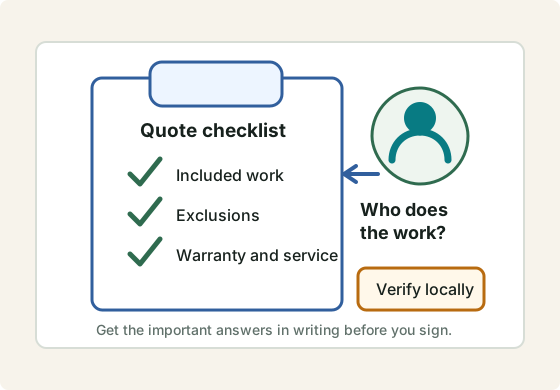
Written inclusions, exclusions, change-order process, and timeline.
License, insurance, training, service area, and who performs the work.
Warranty, service calls, maintenance, and post-install support.
This checklist focuses on scope clarity, documented qualifications, and the limits of any marketing claim.
Scope and exclusions
Ask what is included, what commonly changes price, what work is subcontracted, and whether cleanup, permits, warranty, and disposal are included.
Fit and timing
Ask whether they handle urgent timelines, temporary solutions, multi-room projects, or work after hospital discharge.
Documentation
Ask for license/insurance information where relevant, written scope, warranty terms, and a point of contact. Verify locally before signing.
Questions that make quotes easier to compare
Ask for included work, exclusions, change-order process, cleanup, disposal, permits, and timeline in writing.
Ask which license, insurance, training, or certification applies to the actual work, then verify locally.
Ask who handles warranty, service calls, emergency repair, and post-install questions.
Common questions
What is the first question to ask an aging-in-place contractor?
Ask what is included in the written scope and what commonly becomes extra after measurement or inspection.
Should I treat CAPS or other training as verification?
No. Training can be a useful signal, but it does not replace checking license, insurance, scope, contracts, permits, and local requirements.
What should be in a home safety quote?
A useful quote should identify materials, labor, exclusions, permits if relevant, cleanup, warranty, timeline, change-order process, and who performs the work.
Is a sponsored listing a quality claim?
No. Sponsored visibility should be treated as advertising unless a separate, documented verification method is shown.
Ask questions that expose the quote shape
These questions help you compare answers without relying on memory after several calls.
- What is included in the first written scope, and what commonly becomes extra after inspection?
- Which details do you need from photos or measurements before deciding whether this is a fit?
- Who performs the work, who supervises it, and who handles service or warranty questions later?
- What would make this project slower, more expensive, or inappropriate for this home?
Sources checked
What this page cannot decide for you
- A planning guide cannot inspect the home, confirm local code, verify provider quality, or judge medical suitability.
- Treat cost ranges and decision tables as preparation tools, not final prices or professional advice.
- Before hiring, verify licenses, insurance, permits, contracts, warranty terms, and local requirements with the provider or authority that applies to the actual scope.